
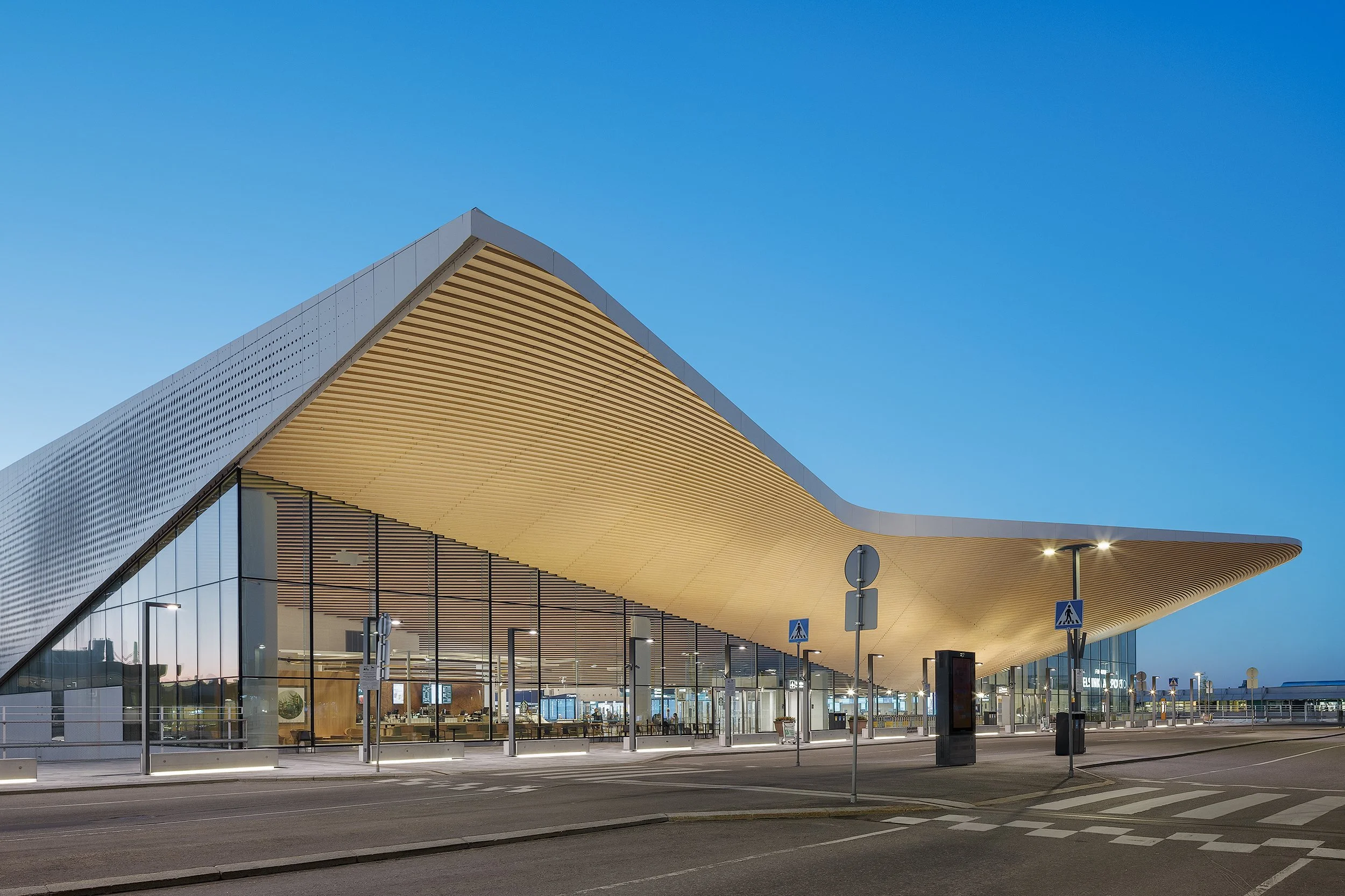
Shoot a facade at midday and it falls flat.
Hard overhead sun, a washed-out sky, every warm light on the building lost in the daylight. Wait for full dark and the opposite ruins it. The sky goes black. The building floats in a void. It needs its setting and its glow at the same moment, and only one window gives both.
Wait for the sky to hold colour
For about 20 minutes after sunset, the sky keeps a deep saturated blue that sits within a few stops of the building's own lighting. Warm windows, an entrance, the glow under a canopy: all of it reads now against a sky that still has depth. One exposure range holds the whole scene. No void. No flat noon sky. The colour the eye expects, captured in camera the way the place actually looked.
Warm light against a dark sky is the oldest sell
Warm glow against a deep blue sky does the selling before anyone reads a word. Nobody scrolling at midnight thinks "good blue hour photography." They think they want to be there. Warm light in a dark landscape is the signal for shelter, arrival, somewhere worth walking toward. It works on a house, a hotel, a terminal, any building someone is meant to want.
Plan the frame hours before the light arrives
I plan the frame in daylight, never in the window itself. Positions marked and locked through the afternoon, every angle built for the short stretch that opens after sunset and closes within minutes. ISO 100, f/8 to f/11, exposures from 1/15th to 4 seconds. Three to five brackets per position, blended later for the strongest sky and the cleanest light on the building. Midday has its place: hard shadows reveal geometry, columns throw parallel lines, a cantilevered roof cuts sharp against the light. But the hero image lives at blue hour, and by the time the colour arrives the only job left is execution.
That one frame becomes the hero for the entire project. See more across the Exteriors Gallery.