
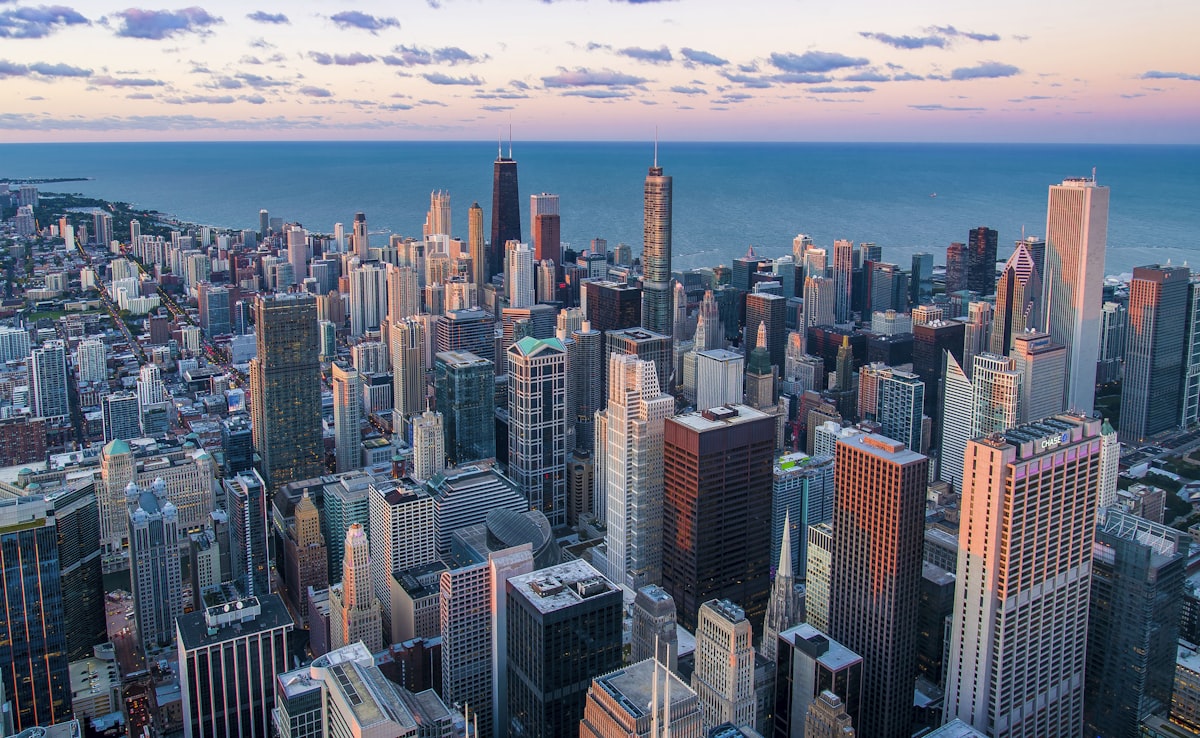
Drones are standard. That is why they are overused.
From the ground, the Helsinki Biennial Pavilion looked like timber columns and harbour. From 60 metres, the spiral revealed itself for the first time, turquoise water filling the negative space between the structure's arms. That overhead composition became the defining image. Without the drone, the design intent was invisible. But not every project earns that moment.
Where altitude adds meaning
Lakeside villas surrounded by forest. Coastal developments where waterfront proximity is the proposition. Campuses whose geometry only reveals itself from above. When the relationship between building and environment is a value driver, aerial communicates something ground-level cannot. EASA limits altitude to 120 metres in most European zones. Gulf permits require 5 to 10 business days advance application. We handle all permitting as part of pre-production.
Where it does not
A residential building in a dense urban block, photographed from above, looks like every other building on the street. Ground-level photography isolates the building and controls the frame. Boutique hotels whose value is interior atmosphere gain nothing from an aerial of an unremarkable rooftop. The production budget yields better returns redirected to interior lighting. Wind above 25 km/h grounds most commercial drones. The same golden and blue hour windows that produce the strongest ground photography produce the strongest aerial work.
One decision per project
Aerial is included when the brief and property justify it. It is excluded when it does not add value. The question is never "should we fly?" It is "does altitude reveal something ground-level cannot?" If the answer is no, the drone stays in the case and the budget goes where it works harder.
See examples in the Pavilion aerial documentation and Exteriors Gallery.